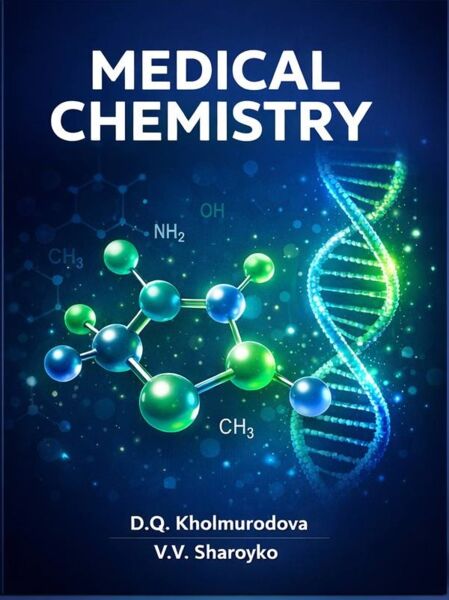
Medicine is one of the fastest developing fields of science, and its continuous progress relies on a strong foundation in the basic sciences. Among these disciplines, chemistry occupies a central position, as it provides the molecular basis for understanding the structure, composition, properties, and transformations of substances that constitute living organisms.
Every physiological process, biochemical reaction, and pharmacological effect occurring in the human body is governed by chemical principles. Therefore, a thorough understanding of medical chemistry is indispensable for future physicians and other healthcare professionals.
Medical Chemistry is a fundamental preclinical discipline that integrates the principles of general, inorganic, physical, organic, and biological chemistry with medical sciences. It enables students to understand the molecular mechanisms underlying normal physiological functions and pathological conditions, while providing the scientific background necessary for studying biochemistry, physiology, pharmacology, pathology, microbiology, molecular biology, genetics, toxicology, laboratory medicine, and clinical disciplines. A solid knowledge of chemistry allows medical students to interpret laboratory findings, understand the mechanisms of drug action, evaluate metabolic disorders, and apply scientific reasoning in clinical practice.
 English
 Русский
 O'zbekcha